Friday, 12 April 2019

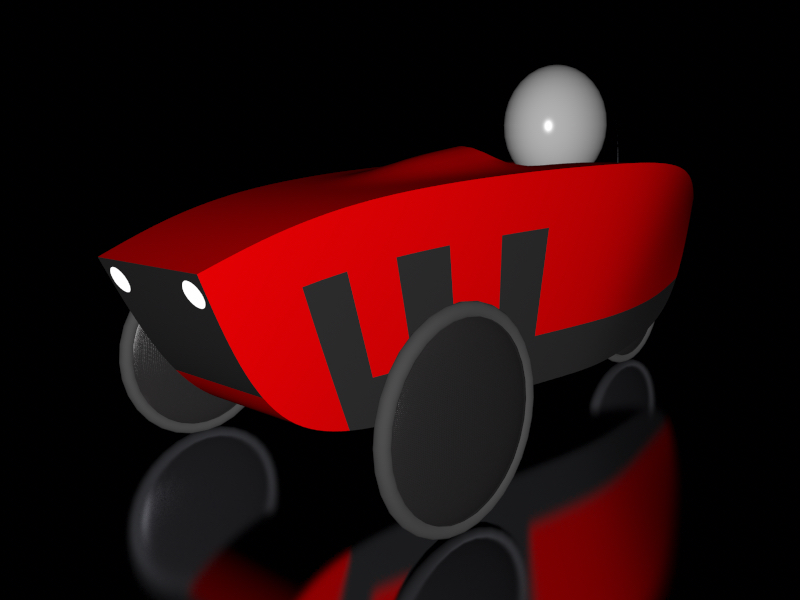
Final wheels out design


Decided to go with wheels out design, More practical and only slightly less aerodynamic (plus it looks cooler).

Sunday, 9 December 2018

Wheels out velomobile design with Cd of 0.28


I have now achieved a Cd of 0.28 for the wheels out design. This should lead to a CdA of between 0.09 - 0.11 depending on final configuration. This design is a lot more practical while still being as aerodynamic as other production velomobiles. Chassis is well under way and will be finished before 2019. I am constantly having to keep tp my design goals which are...
• Low weight (under 22kg)
• Lower cost of production (hope to be under €2500 or US$3000)
• Safety (some crash protection)
• Practical everyday use velomobile.

Wednesday, 19 September 2018

Velomobile in virtual windtunnel

Veloci-velo in virtual wind tunnel at 32 km/hr (20 mph). At this speed the cdA= 0.08, with further tweaking this could be reduced but will do the fine tuning on working prototype using wool tufts and video footage. In combination with lightweight chassis (under 22kg) I hope this velomobile will be competitive in average speed with more performance biased velomobiles such as the DF and the WAW but at a significantly lower cost.


Saturday, 5 May 2018

Veloci-velo design philosophy

veloci velomobile ©2018

The design philosophy for this velomobile are low vehicular mass, aerodynamics, ease of manufacture, cost and minimal environmental impact.
Main benefits are...
  • Non-polluting - 65% of all carbon monoxide emitted into the environmental is from road vehicles.   Veloci-velo is a Zero Emission Vehicle.
  • Healthy and Fun - Easier than riding a bike, get fit commuting, shopping or just out cruising.
  • Easy to park and store - Requires no wall or object to lean it against, takes up less than 1/6 loadspace of average automobile.
  • Secure and safe - Stable and nimble tadpole trike design. Built in frontal crumple zone.

To understand my vision you really need to understand the problem...
The problem with most of todays personal transport options comes down to one thing - MASS!
Everyday 66% of vehicle journeys are under 6km in distance are taken by just one person!
This seems incredible especially when drawn to the fact that the single occupant only makes up 2-8% of the total mass being transported. So why do we need a 1000+ kg machine to transport one person such short distances? Is it for convenience sake?


Wednesday, 4 April 2018

Common chassis open or enclosed wheels


The great thing about designing my own velomobile is that I can have one of two options for the bodyshell. I can have an open wheel design like the one on the left or an enclosed version on the right. Both use the same chassis. The advantage for speed goes with the enclosed version, but style and practicality the winner has to be the open wheel design velomobile. What's your favourite?

Friday, 23 February 2018

Noise inside a velomobile

From my experience in riding velomobiles I have found one of the most irritating aspects to be the amount of noise (rumbling) when inside a moving velomobile. All this noise adds up to rider fatigue and makes the velomobile annoying to use when compared to a diamond frame bicycle.

Commercial fiberglass or carbon fibre monocoques are hollow tubes that echo like a drum with all the drivetrain and road on tyre noise as well as the suspension noise being transmitted to the rider.


Quest Velomobile Fiberglass Monocoque 


Solutions? I really like the foam shells of John Tetz the only issue with this construction method is the labour involved and the shell only provides limited crash worthiness. But it is lightweight and noise would be minimal due to the sound absorbing properties of the foam.

John Tetz Foamshell Velomobile
John Tetz Foamshell

Another great design is this Softshell concept velomobile has been made by Czech designer Martin Miklica. This approach would mitigate noise but if the fabric is too tight it may cause a drum effect.

Martin Miklica Softshell

Of course there are other solutions such as used in the car industry such as acoustic soundproofing, rubber mounted sub chassis etc. etc. but this approach always adds weight which is undesirable in a velomobile. Maybe even an approach of using all three of the above for one design could be a way of making riding a velomobile a quieter experience?


Saturday, 27 January 2018

Open wheel Velomobile

On my previous post "F1 inspiration" I tested a open wheel design which surprised me with it's aero efficiency. I decided to model this up a bit more in detail with some of the renders below.

What I really like about this design is its simplicity, ease of construction and ingress and egress would be very much easier than a wheels in design.

I can see many benefits especially I think this type of velomobile design would be more accepted by the general public as still being a "bicycle".


Saturday, 20 January 2018

F1 inspiration


I have been looking at single seat race cars for inspiration and although F1 cars have really bad CdA figures that is in part due for the need to have huge downforce and air intakes to cool a high output power plant.
The F1 tub by itself has to protect the driver but also allow the smooth flow of air to the wings, foils and intakes. If we take away these downforce/cooling aids (by the way they are not aerodynamic aids!) we are left with the tub/driver pod.
I quickly modelled up a velomobile with similar design to a F1 tub and put it through the CFD. It made for some astonishing results.
The frontal area calculated out to be 0.32m2 and the Cd was 0.28! put these two together and I got a CdA of just 0.0896 !!!


Although this figure is higher than my older design which had a CdA of 0.07. It really is an interesting comparison and with this "Open Wheel" design it could be made a lot lighter and easier to produce and also have a smaller turning circle. This could be a great design for a practical everyday velomobile.

Friday, 3 November 2017

Simplify and add lightness


Colin Chapman's quote "Simplify and add lightness" should be the catch-cry of anyone designing a velomobile or human powered vehicle. One of my favourite designs which has been designed along this mantra is Bob Stuarts Car-Cycle X-4 https://microship.com/bob-stuart/


This is a fine example of integration of parts to make a simpler vehicle. The use of different materials such as fibreglass for the chassis and coroplast for the body is using the correct material for the job. The fibreglass chassis incorporated the hinges for suspension so in fact the chassis IS the suspension. The coroplast body is tough and resilient to bumps and knocks as well as being lightweight.

Another consideration I see in this design is the cost factor with no real "exotic" materials used.
Too often Carbon fiber is seen as a miracle material and used inappropriately or used in a way that does not utilise its specific properties (i.e.. stiffness with low weight). Read about this wonderful vehicle from the link above.

Sunday, 10 September 2017

Full size mock-up of Velomobile chassis

Mockup of velomobile semi-monocoque to test size and entry/exit. Will have to tweak the design a little. Very easy to get into but a little tight around the shoulders. Will revise.

Veloci-velo
Velocivelo semi-monocoque ©2017

Saturday, 25 March 2017

Practical City Velomobile

I see a need for a velomobile that can integrate well with city traffic. This would mean a higher seat height and room for a child and/or groceries in the back. Again the design must be lightweight and aerodynamic. I really like the Mochet Velocars of the 20's, 30's and 40's . Below is what I see as a possibility.

Length = 2400mm   Width = 1000mm   Height = 1050mm  Weight = 45kg


Wednesday, 22 March 2017

Wheels out velomobile

Here is a render with exposed wheels on Veloci Velomobile. Advantages of this design is the ability of  a tighter turning circle and ease of changing a tyre. I like the look of such velomobiles with the only downside being loss of aerodynamic efficiency (this would be quite small).


Wednesday, 22 February 2017

Elevation of semi-monocoque velomobile

Here is an elevation showing the position and size of the semi-monocoque chassis. Attached to the monocoque will be the rear swingarm, and the front a subframe to locate pedals and front suspension pickups. Again using a semi-monocoque will hopefully make for a lighter velomobile. The semi-monocoque will have to be stiff enough to take loads from the subframes without excessive bending or twisting. I have decided that a good quality plywood would be best for the monocoque for cost for performance.
semi-monocoque velomobile
Semi-monocoque

Saturday, 21 January 2017

Electric assist on velomobiles

After about six months of no progress due to building a new home I have finally got my workshop back and will be starting work on Veloci-velomobile once again.

In this time of limbo I have thought about having electric assist on  a velomobile and came to the conclusion that it would be advantages to have such a system.
Advantages would be...

  • Faster acceleration from standstill and rolling acceleration
  • Easier climbing of hills
From reading reviews of various systems including hub motors, mid-drive and direct drive I believe that a mid-drive system would be best due to the fact it will use the gearing already in the bike. I really like the 8fun system which can be configured with different power outputs to suit regulations. Most common is 250W (Australia & Europe) 300W (New Zealand) and 750W (USA).


Even with 250W the acceleration would be quite impressive and with the aerodynamic advantage of Veloci-velo top speeds would/could  be..

  • 250W = 75 km/hr (46 mph)
  • 300W = 82 km/hr (50 mph)
  • 750W = 120km/hr  (74 mph)
When designing Veloci-velo the design brief was to have a vehicle that could maintain 40km/hr for the average rider so the electric assist needs to be no more than 300W and geared to provide the best acceleration up to the 40 km/hr limit.

See table below...


Wednesday, 14 September 2016

Semi-monocoque velomobile

Final render of velomobile semi-monocoque to be manufactured from plywood. The render does not include a few cut-outs for other components. I hope to get the final weight of this component down to less than 5 kilograms. This final design allows a 'safety capsule' around the rider a feature that I really wanted to have. Making from plywood makes an easy build and the possibility of a true 'flat pack' kitset velomobile. I am exploring the possibility of this being a Open Source Velomobile as this may lead to faster development once the basic design has been done.

Semi-monocoque velomobile chassis
©2016 James McLeod

Semi-monocoque velomobile

Final render of velomobile semi-monocoque to be manufactured from plywood. The render does not include a few cut-outs for other components. I hope to get the final weight of this component down to less than 5 kilograms. This final design allows a 'safety capsule' around the rider a feature that I really wanted to have. Making from plywood makes an easy build and the possibility of a true 'flat pack' kitset velomobile. I am exploring the possibility of this being a Open Source Velomobile as this may lead to faster development once the basic design has been done.

Semi-monocoque velomobile chassis
©2016 James McLeod

Sunday, 4 September 2016

Velomobile front beam suspension design

Most commercially availible velomobiles feature Macpherson Strut independent front suspension. A popular choice for full monocoque designs.


Tadpole design three wheeelers require roll stiffness at the front because the single rear does not have anti-roll stiffness so suspensions have to be correspondingly stiff to reduce body roll.
I intend to have a very simple beam front suspension with the advantages being...

  • Simplicity
  • No track variance when bumps encountered (zero scrub)
  • Can be made lightweight (for velomobile applications)
  • Great roll stiffness
The beam axle can be mounted to the monocoque section using four elastomers which will be the spring and damper all in one. The benefit of this is that the elastomer will provide vibration isolation and reduce the "road buzz" to the occupant. This isolation reduces the fatigue on the occupant.

Go to this link to see a an arguement for a beam axle front Vs Macpherson Strut.